“If You Don’t See Now, You Never See Any More”: Tony Slydini’s Close-Up Magic

***

You don’t often get to see how the mechanics of sleight of hand and misdirection are accomplished by a master. But in this signature routine of magician Tony Slydini, “Paper Balls Over the Head,” the audience is in on the trick from the beginning.

Thanks to YouTuber Michael Lyons

Avner The Eccentric

***

One of the great modern clowns, I first saw Avner perform sometime in the early 80s at the Hudson River Clearwater Folk Festival. He is still performing, and combines a love of clowning, new vaudeville, juggling, and magic to create a character always bound to amuse and amaze.

More of Avner here: Avner Eisenberg

Getting A Leg Up: Rudy Coby


***

Magician Rudy Coby with his utterly original signature Four-legged Man act. I hesitate to say you’ll get a kick out of it…

Thanks to YouTuber dtrent747

Will The Cards Match: A Formula

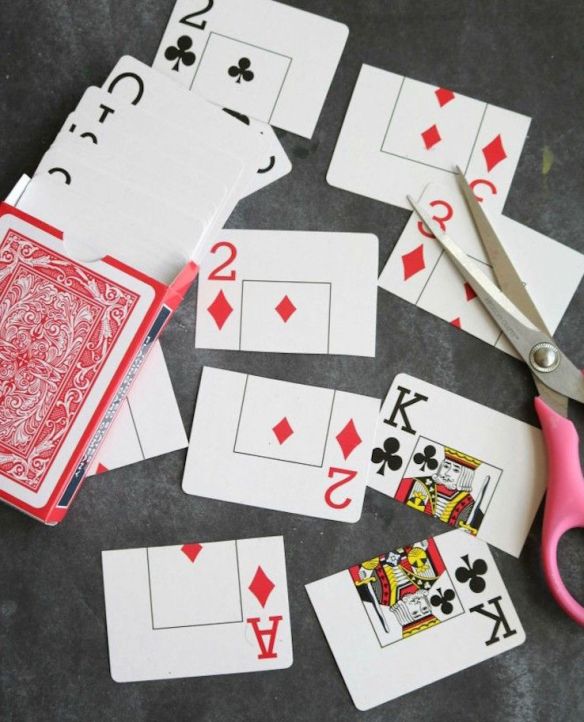
cut cards

***

Today’s post is for the magic nerds among us. An excellent staple of mental card magic is an effect by Larry Becker called “Will The Cards Match?” It’s based upon a clever math principle first used in magic by Howard Adams, and the trick itself can take many forms depending on the performer’s imagination. My favorite presentation is one that uses a set of business cards: each card has a famous name written on the back, and the cards are torn in half into two mates. After turning all the pieces face down and subjecting them to shuffles, cuts, and a spectator-controlled sorting procedure, the pieces, against all odds, end up paired next to their mates.

Since the standard method of doing this trick uses the spelling of the title phrase, many magicians are curious about 1) What other phrases would also work, and 2) What if instead of using the usual five cards, one wishes to use some other number of cards?

So quite a number of years ago, I worked out a method to determine phrases for any number of cards.  This will allow the performer to customize by occasion and venue the phrase that is used.

Here’s a modified version of how I described it on one of the magic forums about a decade ago:

“A) Suppose each pile of cards contains X cards to begin with. Then a workable phrase could have for its first word X-1 letters, the second word X-2 letters, the third word X-3 letters, the Nth word X-N letters and so on. So, for example, for five cards, four words of lengths 4-3-2-1 will work.

B) But those word lengths are not unique. Each of the word lengths can be adjusted in the following way:

At any point, you may add to any of the above lengths any multiple of the number that is one more than the original word length. That is, at word N, you may add any multiple of X -N+1.

Example: I have two five card piles. By the first formula, I can have a phrase consisting of 4 letters, then 3 letters, then 2 letters, then one letter.

So the first word has length 4—WILL

The second word has length 3—THE

The third word should have length 2—but we’re going to adjust its length for a better phrase.

I can add as many multiples of the original number plus one that I like. Since at this point the original word length would have been 2, I  can add any multiple of three (one more than 2) to the original word length of two.. For instance I can add exactly three to two to get five letters for the third word—CARDS

On the fourth word (on which I originally had 1 letter) I can add any multiple of 2 (one more than one) to my original 1. If I add 2×2 to 1, then I get five—MATCH

So, in this example, I have a phrase consisting of 4-3-5-5 which is Will The Cards Match.

Now let’s try this with six cards in each pile to make this more clear.

To start with:
First word . . . five letters
Second word , . . four letters
Third word . . . three letters
Fourth word . . . Two letters
Fifth word. . . One letter

So a workable sequence of word lengths for 6 cards could be a phrase with 5-4-3-2-1 letters

Now I’ll make some adjustments so that I can get a more convenient phrase:

First word, leave as is . . . five letters—MAGIC.
Second word, leave as is, . . . four letters—WILL.
Third word, originally three letters, which means I can add any multiple of four (one more than three). So I’ll add just 4 to the original three to get seven letters—ASTOUND.
Fourth word, originally two letters, so I can add any multiple of three (one more than two). In this case I’ll add 3 to the original two to get five letters—EVERY.
Fifth word, originally one letter, so I can add any multiple of two (one more than one). In this case, I choose to add two times two to the original one, to get five letters—CHILD.

So my sequence could be 5-4-7-5-5.

For example, “Magic Will Astound Every Child.”

Another sequence that will work using the above instructions is 5-4-3-2-5. Only the last word length needs to be adjusted here. So, “Every Body Can Do Magic.”

It may seem a little complicated, but if you’ll follow along with cards in hand, you’ll see that it works easily, and you can create your own phrase for any number of cards. Let me know if you have any questions.

Carpool Lane Magician: Zabrecky

***

A quirky, funny, and ultimately cryptic short film about a would-be magician who can’t seem to find his way in life.  Rob Zabrecky plays the stunted soul under the thumb of his mother. Zabrecky is a true film actor: his face, even in silence, reveals the anguish within.

Thanks to director and YouTuber Andrew Madsen Jasperson

Zabrecky’s Psycho-logy

***

It’s hard for a modern magician to adopt an extreme persona without seeming corny, but Rob Zabrecky’s funny warped psycho magician character humorously illustrates what it might have been like had Norman Bates taken up magic as a hobby.

Thanks to YouTuber Simon Drake’s House of Magic

Safety Last: Harold Lloyd

***

One of the most hair-raising sustained scenes of physical comedy ever filmed. Only Buster Keaton could rival Harold Lloyd when it came to feats of physical stamina and inventiveness on the silent screen.

Magic tie-in bonus: Lloyd was an amateur magician who once had a magic trick published in Ted Annemann’s The Jinx.

Thanks to YouTuber ict4eso

Breakfast Magic: Johan Stahl

***

An enchanting little routine with wonderful sleight of hand by the Swedish magician, Johan Stahl.

Thanks to YouTuber TheMagicWallTMW

Breaking the Frame


***

After reading my friend Mitchel Cohen’s essay on factors affecting how people change their political views, I was reminded of the scene above from Chaplin’s Modern Times (I’m strange that way). Facts alone, Cohen says, are often not enough to change a person’s political views, because the person’s psychological reaction formation simply dismisses the new facts as false propaganda.

I’m a little less pessimistic concerning facts. Generally, I think that facts that challenge the framework of the conversation, or move the discussion to a wider context, some meta-level, can be very useful.

Well, this isn’t the place for that discussion (but see Mitchel Cohen’s excellent series of essays here: http://www.redballoonbooks.org/books/books.html for really deep imaginative thinking about how political change is effected and affected).

But what that conversation reminded me of was the roller skating scene from Modern Times, as well as reminding me of magic and the technology of deception. If you haven’t watched the video above yet, please take two minutes to watch it. Don’t watch the video link below though yet—it’s a spoiler.

Once you watch the first video, consider your feelings about the scene. Next click the link below.  I think you’ll enjoy it. Consider what happens to your mindset about the first video when the frame is broken.

Click here for the second video.

Thanks to YouTubers TheChaplinFilms and Petr Pechar


Founding Father

IMAG0289

(Click to enlarge)

Street lamp covered in mosaic tiles.

Astor Place,

New York, New York

Mixed Up Theo

theodore-anneman-2

***

Theo Annemann was a magician often considered the patron saint of mentalism. He was a prolific inventor of card magic as a young man, something of a prodigy, although he really distinguished himself as the editor and publisher of a weekly magazine devoted to close-up mental effects, started in 1934, called The Jinx. The effects and methods contained therein were foundational for just about every succeeding performer of mental magic afterwards, but the real joy of reading The Jinx now is the light it shines on the New York magic scene of the ’30s contained in Annemann’s editorials and reviews.

Alas, although Annemann was in his early years a dynamic performer, by the end of 1941 the 34-year old’s life was a mess: he was in debt, working on his second divorce, drinking heavily, his gums were seriously infected, and although terrified now of performing in public, a show was coming up. He sought to solve his problems by attaching a hose to his gas oven and inhaling. He was found dead the next day in his pajamas,  a bag over his head and the hose still attached. Poor Ted.

This is all by way of repeating one of my favorite anagrams, created by Harry Anderson, magician, raconteur, wise guy, and actor (he was the judge in the popular 1980s TV sitcom, Night Court).

Theo Annemann:

A man, then none.


El Mouldo: Johnny Carson

***

El Mouldo was yet another hapless magician from the Carson cast of characters. In this segment from 1974 he challenges an audience member to do his magic act.

The talented woman in the sketch is Tracy Newman, whose younger sister, Laraine Newman, was one of the original Saturday Night Live cast members.

Thanks to YouTuber miguelbonaroti


Elliot “The Hawk” Performs “Sam The Bellhop”

***

Comedian Dennis Hemphill as Elliot “The Hawk,” magician extraordinaire.


Thanks to YouTuber hummpy

Werx of the Jerx

1487649040140

Andy is now well into year two of The Jerx, and Issue #4 of the JAMM monthly newsletter. While the first year’s blog had quite a number of very strong effects, some of which made it into The Jerx book, the second year saves most of the tricks for the newsletter. Now the blog is for the most part Andy’s attempts to flesh out a theory of amateur performance (interspersed with ads in support of his website). Leaving aside the newsletter for now, I thought I’d link to some of my favorite second-year blog posts.

A few things first, though. Number one: I have no idea what sort of human being Andy is in his other lives, but in his Jerx life, he has been, contrary to the expectations of many skeptical magicians, a model citizen. He has delivered everything that he has promised—two books, a monthly newsletter, other paraphernalia, and most importantly in my opinion, his blog—in a timely manner. While this is the normal expectation in most spheres of commerce, sadly, for some reason in the magic world, it’s too often the exception rather than the rule. So although Andy would probably cringe at the designation, he has been a man of integrity.

Number two: I’m sort of done with telling folks how good some of this stuff is. There’s enough for free on the blog to decide whether it’s your kind of thing or not. Andy takes a kind of cost-analysis approach to his magic that basically asks: what investment of time/money/practice will best improve the experience of magic for the audience? Andy’s real strength is that when he puts forth an idea, he really explores it and puts it into practice, rather than just giving lip service to the concept. But because improved audience impact often has nothing to do with issues of method, and rather results from focusing more on presentational issues, some will bypass The Jerx. All I can do is shrug my shoulders.

So, here are some of the Year Two blog posts I’ve enjoyed:

The Hidden Benefit of the Unbelievable Premise

Dissonance

The False Constraint

The Wonder-Room

Universal Presentations

The Gloaming

The Least You Can Do

Romantic Redux

The Five Movements

The Pulp Fringe-Imp

By Indirections Find Directions Out

***

Here’s a wonderful example of a magician who uses misdirection expertly and repeatedly. Magician James Brown won London’s Magic Circle Close-up Magician of the Year in 2006 for this routine.

More James Brown at James Brown

The Ocular Proof

copyedits

Othello demands from Iago the ocular proof, and I’ve spent the last month or so providing such, in a manner of speaking. I’ve been proofreading  and copy editing an excellent new magic book, Details of Deception, by Greg Chapman, and I’m quite enjoying the process. That must seem a strange thing to say for such a potentially tedious assignment, but the book is so intriguing, and the author such a gentleman (not always the case in the niche world of conjuring), that I was glad to take on the assignment.

I’ve written before about some of the challenges of copy editing and writing a book of magic. Stephen Minch, one of the great writers and publishers of magic literature, has given magic writers a unique style guide. Because of magic’s technical nature, the text of a book about card magic in some ways more closely resembles that of a car repair manual than that of, say, a novel; so by all means if you are about to embark on writing a magic book, your first stop should be Minch’s guide. You can download it for free here.

I’d like to just briefly mention a few other practical things that I’ve learned to watch out for in an endeavor like this. Much of this can be applied to non-magic literature as well:

  1. Obviously the text must be free of typos and grammatical mistakes, that’s a given.  But care must also be given to the font size and font type as well. It’s easy to import a section from one computer to another, or even a section typed on a cellphone, and not notice that the fonts or font sizes are not matching. Along with this, in this age of being able to italicize words with the stroke of a key, make sure that you’ve selected the entire word. It’s easy to miss an initial capital letter in a title.
  2. Illustrations need to end up in the proper order and in the proper place. After moving around paragraphs of text, the illustrations can get out of synch, both with the text and with their captions.
  3. Illustrations need to be accurate and consistent. Is the deck being held in left-hand dealing position or the right hand? Is it a mirror view or a real-life view?
  4. Are headings and subheadings in a consistent style? Is there a consistent style of section breaks following the headings?
  5. Check to see that the page numbers in the Table of Contents are accurate. Just because they were accurate in Draft 3, doesn’t mean that they are still going to be accurate in Draft 14.
  6. Check to make sure that the title pages and major chapters begin on odd-numbered pages. This is another area where the pagination could have been correct in an early draft, but got messed up afterwards, due to edits.
  7. Every magic effect must be worked out with a deck of cards in your hands. You need to make sure that you can actually follow the directions step-by-step, and you need to see that by following the directions you can bring the trick to a successful conclusion. There’s no way around this. If the author writes a passage which describes a card 17th from the top of the deck when it should be 18th from the top in order for the trick to work, there’s no way a mere scan of the text will find the mistake. Likewise, if a description reads, “the top card is now the Ace of Hearts,” you need to check that that will actually be the case. You don’t have to be able to do all the moves up to speed, but you should be able to get through them all, even if only in a novice’s manner.

I hope these few pointers will be helpful. But more, I think if you’re a card person you’re really going to like this book. I hope you find it a good read.


The Glass Act: Joseph Reohm

***

One of the hardest things in magic is to come up with a new plot. I hadn’t heard of Reohm before I came across this clip of him on Penn & Teller’s Fool Us, but I enjoyed this pretty glass-themed magic routine a lot.

More from Jospeh Reohm at JosephReohm

The Magic Sword: 1901, Robert Paul

***

A short 3 minute movie made at the birth of the new medium that so intrigued magicians and inventors alike. Robert Paul, who pioneered the invention of film in England (Edison for some reason didn’t patent his invention in Britain!), innovated cameras which allowed reverse cranking of the film stock. This allowed him to create double exposures and some of the special effects seen in the movie above.

Thanks to YouTuber shahdhaval369

Book Nook–Magic Edition (2)

books3

***

The past few months I’ve been enjoying a number of magic books, old and new, which I’d like to share with you.

First is St. George’s Hall: Behind the Scenes at England’s House of Mystery by Anne Davenport and John Salisse. This is a fairly specialized book, but it’s very well done. It’s a history of the London theater venue run by several generations of Maskelynes, starting with the patriarch, J.N. Maskelyne, in partnership with the magician David Devant from 1905 – 1935. Devant of course, along with Nevil Maskyelene, wrote one of the seminal books about the theory of conjuring called Our Magic. That book was unique in that it understood that conjuring was part of the theatrical arts, but at the same time also had its own particular requirements. Devant and Maskelyne, perhaps more than anybody before or since, delineated just how the magician should best walk that fine line between theatrical narrative and conjuring necessity. St. George’s Hall makes clear with its extensive details and photos of thirty years of St. George’s entertainments, that the theory of Our Magic was borne out of hard struggle and daily practical knowledge of what worked and didn’t work. Many of the entertainments were short plays centered around an illusion that Maskelyne or Devant had created and worked into some fantastical plot. The most surprising thing in the book for me were the photos of Devant in the various costumes for his plays; it is clear from the variety of characters and make-ups that he used that he was as interested in the techniques of acting as he was of those of conjuring, and saw them both as allied arts.

I like the idea of having little magic pamphlets to read on a subway ride, and recently I came across an old pamphlet called Bunny Bill. The booklet by Robert Neale is an easy to follow origami project that teaches you how to fold a dollar bill into the shape of a top hat. When you squeeze the sides of the hat, out pops a little paper rabbit. It’s all done with one bill without any cuts, tears or tape. Cuteness factor is high, and children enjoy it.

Magician Dai Vernon was the greatest influence on close-up magic in the twentieth century, and for over 25 years, Vernon contributed a column to Genii Magazine called The Vernon Touch. His columns have all been collected in a compilation also called The Vernon Touch, brought out by Rickard Kaufman. The Vernon Touch  had an extraordinary run considering that Vernon was in his seventies when he began the column, and he was over ninety when he contributed his last one. Much of the column was devoted to his reports on the scene at The Magic Castle, where he was in residence. Lots of history and anecdotes, along with many insights into the Vernon conception of magic, but I liked the photos the best, many not published before, of Vernon with his fellow magicians, and Vernon’s Harlequin and Chinese acts. If you subscribe to Genii you can purchase the book at a bargain price.

A few years ago I had the good fortune to be involved with the proofreading of a wonderful book of card magic called The Devil’s Staircase by Greg Chapman. Fans of that book will be very happy to learn that Mr. Chapman is about to release a new book of card magic, kind of a companion piece to TDS, called Details of Deception. It’s an excellent title, because in this book Chapman focuses on the fine details of what makes a sleight, and a performance of card magic, deceptive. As in the last book, most of the material is gambling-themed, but a careful reading of the book will be highly instructive for any intermediate-to-advanced card worker. There are some excellent memorized deck effects, poker demonstrations, an extensive section on estimation with information which to my knowledge has never seen print before, and a large chapter on the second deal which gives detailed instructions of how to do several kinds of push-off seconds, along with some killer tricks that utilize the sleight. While most of the effects are difficult—the ability to do three perfect faros in some routines is taken as a given—there are a few effects for the mere mortals among us, including a very clever ACAAN routine. I highly recommend this book if you’re looking to improve your card magic, if you’re a memdeck guy or gal, or if you just want to see how deeply a guy like Chapman can think about card magic.

Magic Royalty: Ricky Jay and Fred Kaps

***

Here’s some unusual footage of magician Ricky Jay when he was young, which I hadn’t seen before. He’s on the British variety television show, The Michael Parkinson Show, and Parkinson’s other guests included the well-known Dutch magician Fred Kaps.

The video is of poor broadcast quality but I thought aficionados might enjoy watching Jay perform some of his evergreen effects as Kaps and Parkinson react.

I extracted this video from an hour long video posted by YouTuber World Greatest Magicians


Shhh…Secret

***

Secret is the name of magician Derren Brown’s new live one-man show, and I’m happier than a pig in manure because for the first time ever, Derren is bringing his new show to the United States. Better yet, it’s opening in my city, New York City, this May, under the auspices of the Atlantic Theater Company. If you order now, you just might be able to get tickets.

In my opinion, he’s not just good, but so much better than any other contemporary mentalist, that it’s almost not fair to compare him with anyone else.

Click on the video above to see a very entertaining piece from his 2008 live show, An Evening of Wonders.

Hidden Figures

***

No, not the film (not perfect, but worth seeing for some excellent acting, and a tautly written account of a little known but important event in US history), but magicienne (that’s what she calls herself) Julie Eng.

That’s her dad, Tony, who you see in the video, also in the family magic business, at least that’s his face. But the hands—and the sleight-of that goes with them—belong to daughter Julie.

She’s an excellent close-up and all-around magician herself. In the video she proves it by magishing without looking. The magicians at the convention are well aware of what Julie is doing and just how difficult it is to pull off.

And proud Dad is able to smile and say—Look Ma, no hands!

Here’s a picture of the talented Ms Eng:

images-duckduckgo-com

Click on the video to give her a big hand.

Thanks to YouTuber The King of Magic